



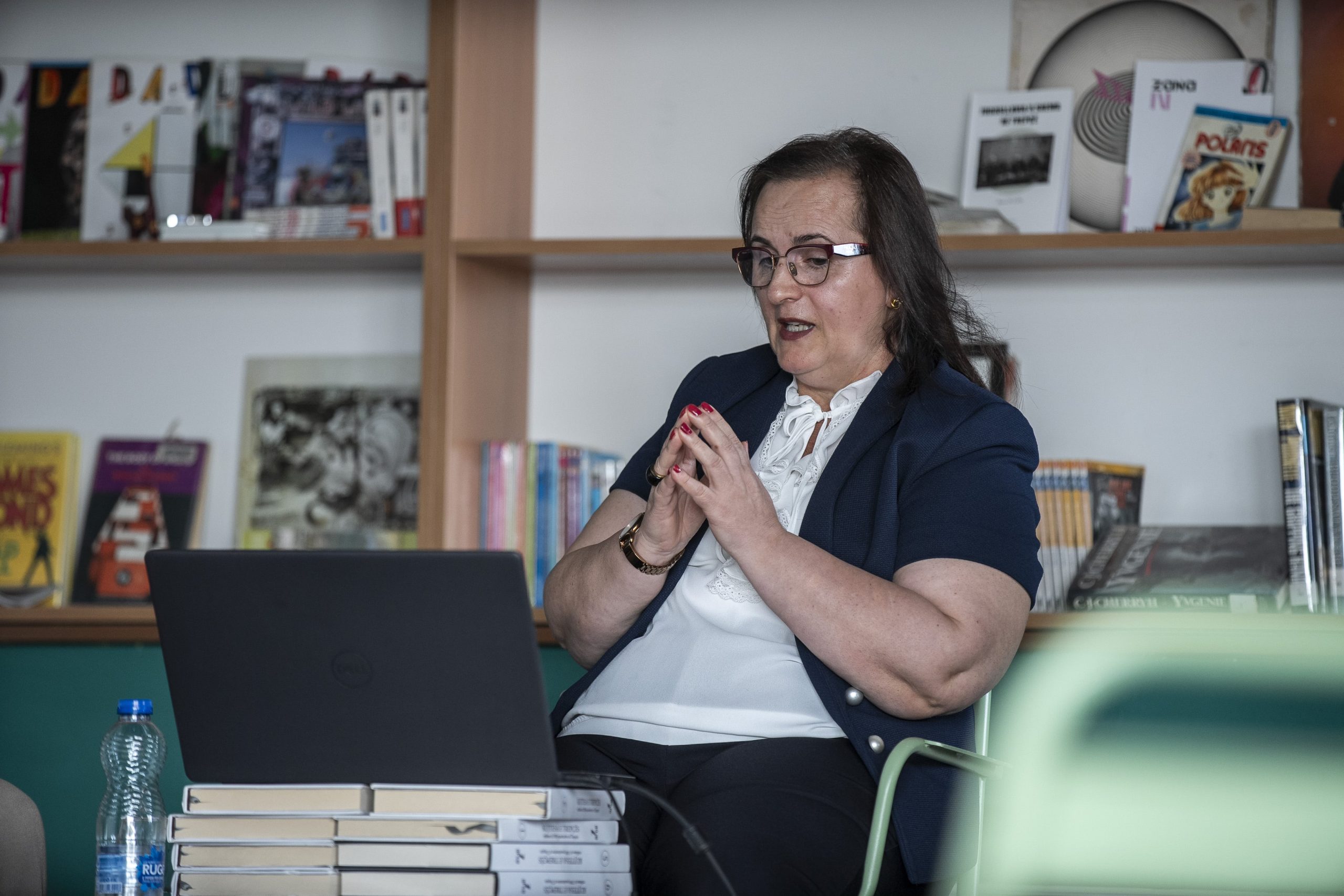
Green Talks: “The Truth About Chemical Pollution”
Assoc. Prof. Dr. Milihate Aliu explained that mercury (Hg), commonly known as “quicksilver,” is a metal with high toxicity and a direct impact on the nervous system, particularly in children and fetuses. Its most dangerous form is methylmercury, which is closely linked to neurotoxicity and can cause serious health damage.
According to the U.S. Environmental Protection Agency (EPA), the maximum acceptable daily dose of methylmercury is only 0.1 micrograms per kilogram of body weight per day (0.1 μg/kg/day). This is one of the lowest tolerated values for any toxic substance, highlighting the extremely high risk posed by this pollutant.
She noted that although some heavy metals such as copper (Cu) and zinc (Zn) are essential for the human body in small amounts, at higher concentrations they can become potentially toxic.
The studies presented by Prof. Aliu show that the researched area includes Mitrovica, Zvečan, and Vushtrri, covering a surface of over 301.5 km². This area has been historically polluted by heavy industry, particularly through the processing of heavy metals. A total of 156 soil samples were collected using a systematic sampling grid and analyzed using modern laboratory methods. Mercury concentrations ranged from 0.02 mg/kg to 11 mg/kg, with an average concentration of 0.2 mg/kg.
“In these areas, pollution is not an assumption, but a scientifically proven fact,” she emphasized. Pollution in this region includes toxic substances such as mercury, cadmium, lead, and sulfuric acid, as well as metal particles released from smelters, battery factories, the use of sulfuric acid, and electrolysis processes. For decades, these substances have contaminated the air, soil, and water in the region, where toxic metals bioaccumulate in the environment and spread through the food chain, causing significant negative impacts on the public health of the local community.
Given that mercury poses a serious risk to both the local community and the environment, it is essential to conduct in-depth analyses of the sources, distribution, and long-term consequences of Hg pollution in the industrial zone of the Mitrovica region.
Prof. Aliu stressed that measuring the concentration of a metal alone is not sufficient to assess pollution levels. For this purpose, scientific indices are used, such as the contamination factor, enrichment factor, and ecological risk index. These indicators help determine whether pollution originates from natural sources or from anthropogenic (human) activities.
In conclusion, she proposed the need for concrete strategies to monitor and manage pollution in order to protect human health and the environment:
- Continuous monitoring of air, soil, and water;
- Training of local staff and cooperation with certified laboratories;
- Informing local farmers about the risks of cultivation on contaminated land;
- Use of hyperaccumulator plants such as sunflower and corn for soil remediation, with controlled treatment of the biomass;
- Management of hazardous waste in accordance with international standards.
The discussion concluded with a clear appeal for cooperation between the scientific community, local institutions, and residents, in order to address a complex problem that simultaneously affects the environment, the economy, and public health.